
How Often Should Couples Actually Ask Each Other Questions?

There's no single number that fits every couple, but the research points in one clear direction: small and frequent beats big and occasional. One real question a day builds more closeness over a month than a long, deep conversation once a quarter.
The ideal question frequency for couples is roughly once a day or every few days, asked in small doses, rather than occasional long sessions that try to cover everything at once.
Most advice on couples questions focuses on which ones to ask. The more useful question is how often, because frequency changes what a question can actually do for the relationship.
TL;DR
- There's no universal number, but frequent and small consistently outperforms occasional and big.
- Daily or near-daily questions keep a couple's understanding of each other current, instead of relying on a big update every few months.
- Diminishing returns kick in fast within a single sitting. Question five doesn't land like question one.
- Frequency needs shift by relationship stage: new couples can absorb more volume, long-term couples need more precision.
- Overcorrecting into a rigid, forced daily habit backfires almost as much as asking too rarely.
- The right frequency is the one that survives a busy week, not the one that looks ideal on paper.
- Skip a scheduled question when a partner is in crisis, mid-conflict, or clearly needs rest instead of curiosity.

What Is the Right Question Frequency for Couples?
Question frequency is really a tradeoff between depth and sustainability. A couple who commits to two hours of deep questions once a month gets depth, but it's hard to sustain and easy to skip when life gets busy. A couple who asks one small question a day gets less depth per conversation, but far more consistency, and consistency is what actually keeps a picture of each other current.
This is the same logic behind the psychology of the love map: what predicts closeness isn't how deep a single conversation goes, it's whether curiosity about your partner's inner world stays active over time.
Couples communication built around frequency, not intensity, tends to hold up better under real-life conditions, which is most of what a long relationship actually is.
Why Does Asking Too Many Questions at Once Backfire?
The first question in a session usually gets a real answer. By the fifth or sixth, most people are answering faster and thinking less, not because they've run out of things to say, but because attention runs out well before content does.
This is the same mechanism covered in why question games start to feel like homework novelty and attention fade fast within a single sitting, so stacking questions back to back trades quality for volume almost immediately.
Frequent, spaced-out questions avoid this problem entirely, because each one gets asked while attention is still fresh, instead of competing with five others for the same conversation.

The Psychology Behind Why Small and Frequent Beats Big and Occasional
🔑 Key Insight: A relationship's understanding of a partner isn't built in one sitting, no matter how deep the conversation. It's built the way most durable knowledge is: in small, spaced repetitions that stay current, rather than one large deposit that slowly goes stale.
Statistics & Research Insight
This mirrors what learning science calls spaced repetition: information revisited in small doses over time is retained and integrated more effectively than the same content crammed into a single session. Relationship researchers have found a similar pattern in couples, ongoing, low-stakes curiosity predicts relationship satisfaction more reliably than the occasional big, emotionally intense conversation that most couples treat as the real work of intimacy.
How to Find the Right Question Frequency for Your Relationship

Quick Framework: Setting Your Question Cadence
- Start with once a day, in a low-pressure moment, not a scheduled sit-down.
- Notice when answers get shorter. That's the signal you've hit the day's limit, not a reason to add a follow-up question.
- Let intensity vary more than frequency. Some days the question is light, some days it's heavier, but the rhythm stays the same.
- Skip a day without guilt when life is genuinely too full. Missing one day doesn't undo the habit, forcing it usually does more damage than skipping it.
- Adjust for stage and distance. Long-distance couples often need frequency to carry more of the emotional weight, as covered in long-distance relationship questions, while long-married couples need precision more than volume, as covered in questions for married couples.
| Relationship Stage | Suggested Frequency | Best Question Style |
|---|---|---|
| New couple | Several times a week | Broad, discovery-based |
| Established couple | Daily, low-stakes | Mix of light and deeper |
| Long-distance couple | Daily, ideally with voice or video | Context-rich, tone-aware |
| Long-married couple | Daily, but sparing and specific | Update-focused, not broad |
Flamme's daily question model is built around exactly this cadence, one prompt a day, rather than the deck-dump format most question games default to. Since comfort with frequency also varies by personality, the Type of Lovers quiz is a quick way to see whether your partner naturally wants more or less than you'd assume.
What Happens If You Ask Too Rarely, or Force It Too Often?
Too rarely, and a couple's picture of each other quietly goes out of date between the big check-ins, the same drift described in the psychology of the love map. Neither partner notices until a reaction feels oddly out of proportion to what's actually happening.
Too often, and questions start to feel like an obligation rather than curiosity, which is exactly what turns a good habit into something both partners quietly start avoiding. Consistency that's forced past the point of interest, the same pattern behind the small habits that keep couples close losing their effect, tends to collapse faster than an inconsistent habit does.
The sustainable range sits between those two failure points: frequent enough to stay current, light enough to survive a genuinely busy week.
When NOT to Use This
- Don't force a daily question during a stretch of real crisis, grief, or acute stress. Support matters more than curiosity in that window.
- Don't turn a missed day into pressure to "catch up" the next day with extra questions.
- Don't use frequency as a scorecard for how much a partner cares. Life circumstances, not affection, usually explain a skipped day.
- Don't increase frequency to fix a problem a single deeper conversation would actually solve.
Final Takeaway
There's no perfect number of questions to ask your partner each week. There's a range that holds up under real life: frequent enough that your picture of each other never gets the chance to go stale, light enough that it survives the weeks that don't go to plan. Small and consistent beats big and occasional almost every time.
Knowing the ideal cadence doesn't make it easy to actually keep. Most couples don't fail at asking questions because they don't know the theory, they fail because nothing reminds them at the right moment, in the right dose.
That's the gap a structured ritual closes. Emotional intimacy is built through consistency, not intention, and consistency is hard to sustain without something carrying the rhythm for you.
Flamme is a guided system for daily relationship rituals, built around exactly the cadence this article describes.
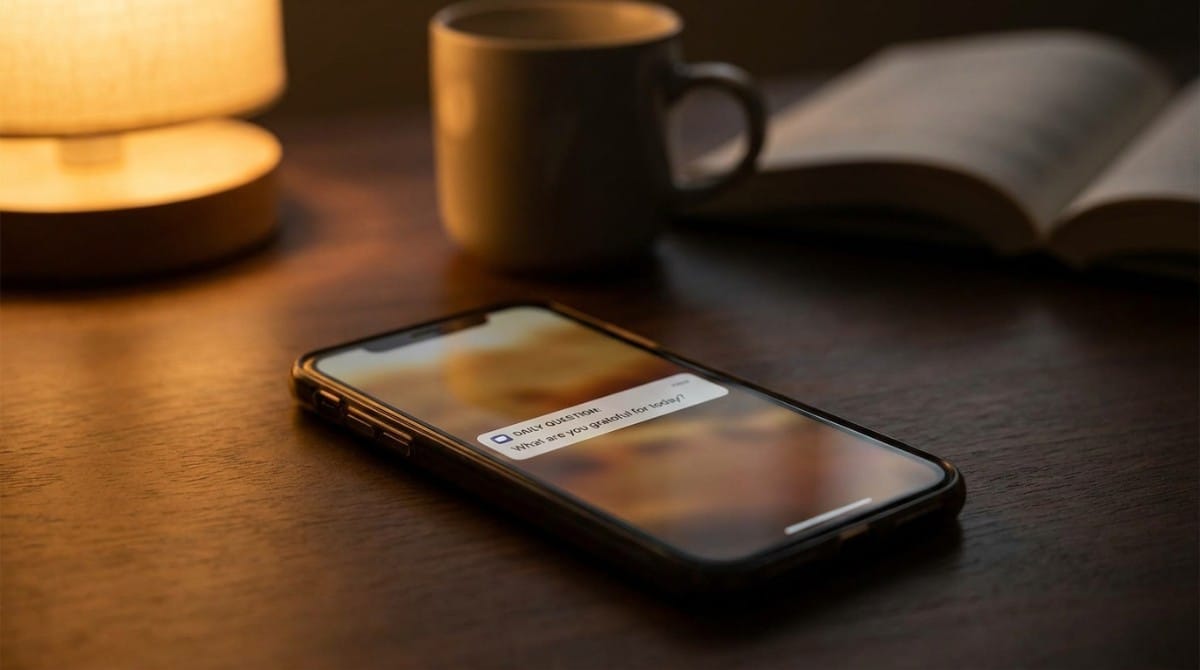
- One question a day, delivered at a low-pressure moment, so frequency never has to rely on remembering.
- Emotional check-ins that flex with intensity, some light, some deeper, without breaking the rhythm.
- Long-distance bonding tools for couples who need frequency to carry more of the emotional weight across the miles.
If you're not sure whether you or your partner naturally wants more or less frequency than the other, the Type of Lovers quiz is a quick way to find out before it becomes friction.
Download Flamme and find a rhythm that actually holds.
FAQ
How often should couples ask each other deep questions? Roughly once a day or every few days, in small doses, works better for most couples than occasional long sessions that try to cover everything at once.
Is it bad to skip a day of asking questions? No. Missing a day doesn't undo the habit. Forcing a "catch-up" the next day with extra questions usually does more damage than the skipped day itself.
Do new couples and long-term couples need different question frequencies? The frequency stays similar, but the style shifts. New couples can handle broader, more frequent discovery questions, while long-term couples benefit more from fewer, more specific update questions.
Why do question games feel worse than a daily question habit? Question games stack many questions into one sitting, where attention and novelty fade fast. A daily habit spaces questions out, so each one gets asked while attention is still fresh.
Can asking questions too often hurt a relationship? Yes. Forcing frequency past the point of genuine interest turns curiosity into obligation, which tends to make the habit collapse faster than an inconsistent one would.