
The Psychology of the "Love Map": Why Couples Who Ask Questions Stay Together

Some couples always seem to know exactly what's going on with each other. Some couples live next to a stranger. The difference usually isn't chemistry, it's whether they've built what relationship researchers call a love map.
A love map is the internal, continuously updated picture each partner holds of the other's inner world: their stresses, hopes, fears, and the small daily details of their life.
Couples with strong love maps aren't guessing at what's going on with each other. Couples without one often are, even after years together.
TL;DR
- A love map is the detailed mental picture you hold of your partner's inner world, not just biographical facts.
- Couples with detailed, current love maps handle conflict and stress better, because they're not guessing at what's driving their partner's behavior.
- Love maps go out of date on their own. People change quietly, and yesterday's accurate picture becomes today's blind spot.
- Small, frequent updates build a stronger love map than occasional deep conversations.
- A fading love map often looks like drifting apart, even when nothing dramatic has gone wrong.
- Rebuilding one takes curiosity, not confrontation.
- Love maps aren't built through interrogation. Rushed or forced questions actually work against them, as covered in why question games start to feel like homework.

What Is a Love Map?
A love map isn't a list of facts, like a birthday or a favorite food. It's a working model of someone's inner life, updated in real time: what's weighing on them this week, what they're quietly proud of, what they're avoiding thinking about.
Psychologist John Gottman coined the term to describe couples who stay genuinely oriented toward each other's internal experience, not just their external life. It's one of the clearest markers relationship psychology has found for couples communication that actually works.
A detailed love map isn't built once. It's maintained, the same way emotional intimacy is maintained, through small, ongoing attention rather than a single conversation.
Why Does Knowing Your Partner's Inner World Predict Whether You Stay Together?
Couples with strong love maps aren't less likely to hit hard weeks. They're better at getting through them, because they're not spending energy guessing at what's actually going on.
This changes how partners interpret each other's behavior. Without an updated love map, a stressed partner's short temper reads as rejection. With one, it reads correctly, as stress, not as a signal about the relationship. This is exactly why your partner's small actions can hit so hard; without context, it's easy to misread ordinary behavior as something personal.
Detailed love maps also make repair faster after conflict, because both partners already have a baseline of trust and understanding to return to instead of starting from scratch.
The Psychology Behind Why Love Maps Fade Without Anyone Noticing
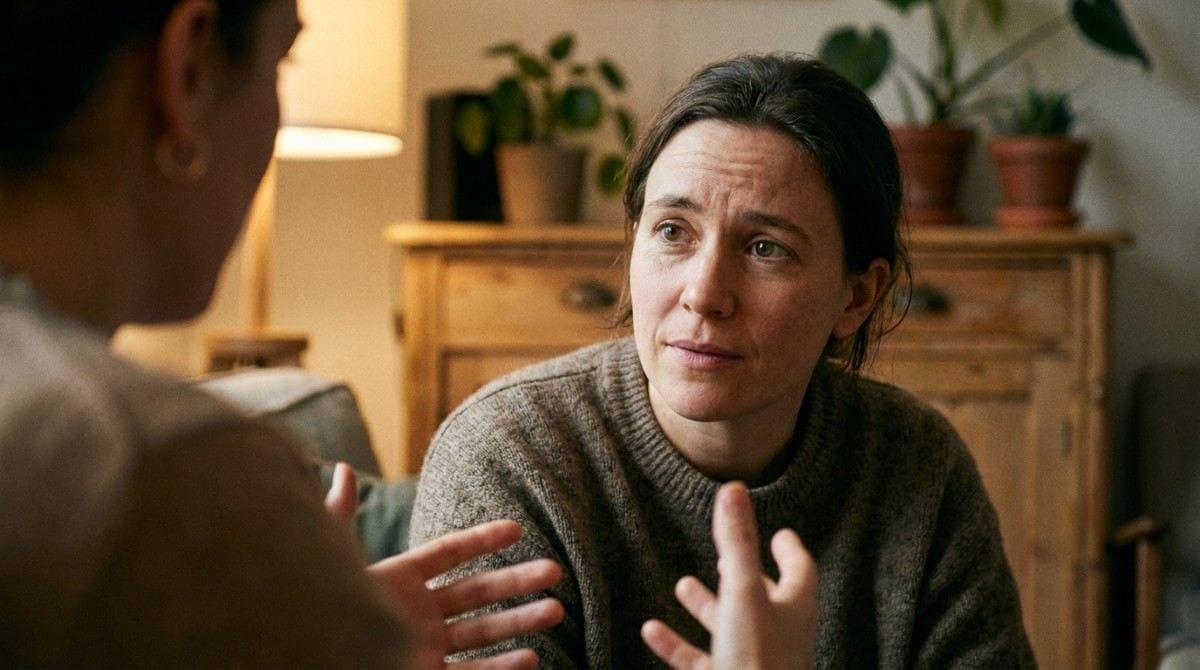
Love maps don't collapse all at once. They fade in small increments, one unanswered "how are you really doing" at a time, until the picture each partner holds of the other is quietly a few years out of date.
This happens because people change gradually, and gradual change is hard to notice from the inside. You don't clock the exact week your partner's priorities shifted. You just eventually realize you've been operating on an old version of who they are.
🔑 Key Insight: A love map doesn't go out of date because a couple stopped caring. It goes out of date because attention, not affection, is what keeps it current, and attention is the first thing daily life quietly erodes.
Statistics & Research Insight
Gottman's research places love maps at the foundation of what he calls the "sound relationship house," the base layer underneath trust, commitment, and conflict management. Across decades of studying couples, his research consistently links detailed, current love maps to stronger relationship satisfaction and more resilient conflict recovery. The pattern holds regardless of relationship length: what predicts closeness is ongoing curiosity, not how long two people have been together.

How To Build (and Keep Updating) Your Love Map

Quick Framework: Updating Your Love Map
- Ask one question a day about something changing, not something fixed. Stresses, hopes, and worries shift; favorite movies don't.
- Follow up on old answers. "How did that thing you mentioned last week turn out?" does more than a new question.
- Notice what your partner brings up unprompted. That's usually where their attention actually is.
- Update, don't assume. What was true about your partner a year ago may not be true now.
- Space it out. why question games start to feel like homework covers why a slow, daily rhythm builds a stronger picture than a long list answered in one sitting.
| Outdated Love Map | Active Love Map | |
|---|---|---|
| Basis | What used to be true | What's true now |
| Conflict | Easy to misread, slower to repair | Easier to interpret correctly, faster to repair |
| Maintenance | Occasional deep talks | Small, frequent check-ins |
| Feels like | Drifting, low-grade distance | Ongoing closeness |
This is close to what the small habits that keep couples close already describes: it's frequency, not intensity, that keeps a relationship's picture of each other current. Flamme builds this same principle into a daily rhythm, one real question a day, so the picture you hold of each other never gets the chance to go stale.
If you're not sure what your partner's love map actually needs right now, whether they process stress out loud or need space first, the Type of Lovers quiz is a fast way to understand their emotional style before you guess wrong.
What Happens If You Never Update It?
Nothing breaks immediately. That's what makes an outdated love map easy to miss until it's already causing distance.
Over time, an outdated love map shows up as feeling like roommates instead of partners, being surprised by things your partner has clearly been sitting with for a while, or misreading distance as disinterest when it's actually something else entirely.
This risk goes up for long-distance couples building emotional intimacy without physical touch, where there are fewer small, incidental moments to catch an update in passing. Distance doesn't damage a love map by itself. Silence does. A steady daily question, like the one Flamme sends each day, is one of the simplest ways to keep passing small updates back and forth even from far away.
Detailed love maps are also why saying "I love you because" carries more weight than saying "I love you" alone; the "because" is only possible when you actually know what you're pointing at.
When NOT to Use This
- Don't turn love-map questions into surveillance, checking for inconsistencies instead of genuine curiosity.
- Don't use them to force disclosure during an argument. That's confrontation, not connection.
- Don't treat a single deep conversation as "done." Love maps need maintenance, not a one-time download.
- Don't push when a partner clearly needs privacy or space rather than a prompt.
Final Takeaway
A love map isn't built by asking more questions. It's built by asking a few real ones, often enough that the picture never gets the chance to go out of date. Couples who stay together aren't the ones who knew everything about each other from day one. They're the ones who keep updating what they know, which is the steady rhythm Flamme's daily ritual is built to protect.
Understanding what a love map is won't keep yours current. That takes a habit, not a single insight, and habits are hard to sustain without some structure behind them.
This is why passive reading only gets a couple so far. Real emotional intimacy comes from consistency: small, repeated attention over time, not one deep conversation followed by months of assumption.
Flamme is a guided system for daily relationship rituals, built to keep your love map active instead of letting it quietly go stale.
- One real question a day, so you're always updating your picture of each other, not relying on an old one.
- Emotional check-ins that surface what's actually changing, not just what's easy to say out loud.
- Long-distance bonding tools for couples who need small updates to travel across the miles, not just across a table.
If you want a starting point for understanding your partner's emotional style before you guess wrong, the Type of Lovers quiz maps communication patterns and bonding preferences in a few minutes.
Download Flamme and keep your love map current, one question at a time.
FAQ
What is a "love map" in a relationship? It's the detailed, ongoing picture each partner holds of the other's inner world, their stresses, hopes, and daily changes, not just static facts about them.
Who coined the term "love map"? Psychologist John Gottman introduced the concept as part of his research on what predicts long-term relationship stability.
Why do love maps matter for staying together? Couples with detailed, current love maps misread each other less often and recover from conflict faster, because they're not guessing at what's driving their partner's behavior.
Why does a love map go out of date? People change gradually, and that gradual change is easy to miss. A love map fades when attention slows down, not when affection does.
How do you keep a love map updated? Small, frequent check-ins work better than occasional deep conversations. One genuine question a day keeps the picture current instead of letting it quietly go stale.