
Questions for Married Couples: What to Ask When You Think You Already Know the Answer

The biggest risk to curiosity in a long marriage isn't running out of new things to ask. It's assuming you already know the answer to the ones you'd ask anyway.
A married couples question is a question asked specifically to update what you assume you already know about your partner, not to fill conversational space or pass time.
Most couples question content is written for people who are still learning each other. Married couples aren't starting from scratch. They're maintaining a picture that's easy to mistake for finished.
TL;DR
- The threat to curiosity in a long marriage isn't unfamiliarity. It's assumed familiarity that's quietly gone out of date.
- "I already know that" is usually a guess wearing the confidence of a fact.
- Married couples don't need more questions than new couples, they need different ones: update questions instead of discovery questions.
- Certainty feels efficient and comfortable, but it's exactly what stops curiosity from restarting.
- Couples who feel "stuck" together often aren't fighting. They've just stopped checking whether their picture of each other is current.
- A specific, current-state question beats a broad, generic one almost every time after years together.
- Skip update questions when a partner is deep in a stressful stretch and just needs support, not an inventory of what's changed.
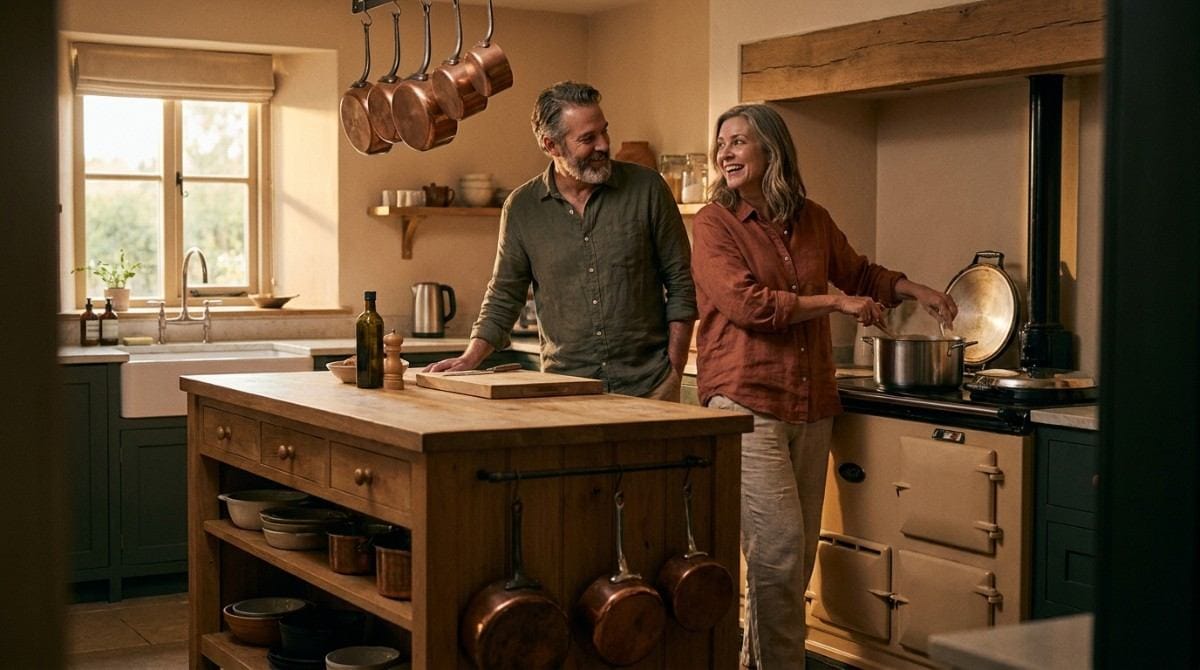
What Is a "Married Couples Question," and How Is It Different From a New-Relationship Question?
New-relationship questions build a first picture from scratch. Married couples questions maintain and correct one that already exists, which is a different job entirely.
That distinction matters because a picture that already feels complete is much harder to update than one you know is missing pieces. As covered in the psychology of the love map, the internal picture each partner holds of the other only stays accurate through ongoing attention, and long marriages are exactly where that attention is easiest to let slide.
Couples communication built for new relationships tends to ask broad, discovery-style questions. Couples communication that works after years together needs to ask narrower, current-state ones instead.
Why Does Certainty Kill Curiosity in Long Marriages?
The more confident you feel that you already know someone, the less likely you are to ask them anything. That's not laziness. It's a mental shortcut: once a picture of someone feels complete, the brain stops treating it as something that needs checking.
This is a different problem than simple repetition fatigue. It's not that the questions got boring, it's that they stopped feeling necessary. Certainty, not disinterest, is usually what's actually blocking curiosity in a marriage that's been running for years.
The uncomfortable part is that this certainty is rarely accurate. People keep changing quietly long after a relationship stops actively tracking it, which is exactly how two people who talk every day can still end up out of date on each other.

The Psychology Behind Why Long-Term Partners Stop Asking
🔑 Key Insight: The real danger sign in a long marriage isn't a partner who's changed. It's a partner who assumes they haven't, because that assumption quietly shuts down the exact behavior, asking, that would have caught it.
Statistics & Research Insight
Gottman's research on long-term couples, explored in more depth in the psychology of the love map, consistently finds that partners who describe feeling deeply "known" after decades together usually aren't couples who changed less than everyone else. They're couples whose partner kept asking regardless of how long they'd been married. Relationship satisfaction over time tracks with ongoing curiosity, not with how well two people once knew each other.

How to Ask Questions When You Think You Already Know the Answer

Quick Framework: Asking Update Questions
- Swap "getting to know you" questions for "getting to know you now" ones. Trade "what's your biggest fear" for "what's been on your mind about work or family lately."
- Ask about the change, not the topic. "Has how you feel about that shifted since we last really talked about it?" catches drift a repeat question won't.
- Say the assumption out loud before checking it. "I've been assuming you're fine with X, is that still true?" invites correction more easily than a wide-open question does.
- Ask more often, in smaller doses, instead of saving it all for one deep annual conversation.
- Keep the pace slow. One question sat with is worth more than several answered quickly, as covered in why question games start to feel like homework.
| New-Relationship Question | Married Couple Question | |
|---|---|---|
| Goal | Build a first picture | Correct an outdated one |
| Risk | Oversharing too fast | Assuming too much |
| Best format | Broad, discovery-based | Specific, current-state |
| Example | "What are you most afraid of?" | "Has that fear changed since we last talked about it?" |
Flamme's daily question ritual is built around this update logic specifically, rather than the getting-to-know-you model most question decks default to. And if you're not sure whether your partner's emotional needs have quietly shifted over the years, the Type of Lovers quiz is a faster way to check than assuming your read from five years ago still holds.
What Happens If You Keep Assuming Instead of Asking?
Nothing collapses after one assumed answer. What builds, slowly, is a version of your partner in your head that drifts further from the real one every year, without either of you noticing the gap opening.
This is close to what being emotionally incompatible actually describes in a lot of long marriages: not a mismatch that was always there, but two people responding to outdated versions of each other instead of who's actually sitting across the table now.
It's also why the honeymoon phase ending doesn't have to mean the relationship is cooling. It often just means the easy, automatic curiosity of the early stage has to become a deliberate habit instead, the same shift that makes keeping flirting alive in a long-term relationship work better when it's paired with real curiosity rather than habitual gestures.
When NOT to Use This
- Don't use update questions as a "gotcha" to prove your partner has changed and you were right to worry.
- Don't turn it into interrogation during an already tense conversation.
- Don't treat it as an annual deep-dive. Small, consistent questions work better than one big check-in.
- Don't use it to relitigate old decisions under the guise of curiosity.
Final Takeaway
Married couples don't run out of things to ask each other. They run out of reasons to, because certainty feels like knowledge even when it's years out of date. The fix isn't more questions. It's fewer assumptions, and just enough ongoing curiosity to keep noticing when your partner has quietly become someone slightly different from who you married.
Recognizing the assumption trap doesn't automatically undo years of habit. Breaking it takes a small, repeated nudge to keep checking instead of assuming, not a single insightful conversation.
That's the gap passive advice can't close. Emotional intimacy in a long marriage is maintained through consistency, small and frequent, not through occasional deep talks that fade back into routine within a week.
Flamme is a guided system for daily relationship rituals, built to keep that update habit alive long after the getting-to-know-you stage is over.
- One question a day, designed to catch what's changed rather than repeat what's already known.
- Emotional check-ins that surface quiet shifts before they turn into distance.
- A Type of Lovers profile for each partner, so you're checking against who they are now, not who they were years ago.
If it's been a while since you checked whether your read on your partner's emotional style still holds, the Type of Lovers quiz takes a few minutes and might surprise you.
Download Flamme and keep asking, one question at a time.
FAQ
Why do married couples stop asking each other questions? Certainty, not disinterest, is usually the cause. Once a partner's picture of the other feels complete, the brain stops treating it as something that needs checking, even when it's out of date.
What's the difference between questions for new couples and questions for married couples? New-relationship questions build a first picture from scratch. Married couple questions correct an existing one, so they need to be more specific and focused on what's changed recently.
How often should married couples ask deeper questions? More often, in smaller doses, works better than one big annual check-in. Frequent, low-stakes update questions catch drift before it becomes distance.
Can assuming you know your partner hurt the relationship? Yes. Outdated assumptions lead to misread behavior and slow drift, since both partners start responding to a version of each other that's no longer accurate.
What's a good example of a married couples update question? Instead of asking a broad question like "what's your biggest fear," ask something specific like "has how you feel about that changed since we last talked about it?"