
How to Repair After Missed Bids for Connection: What to Say, Step by Step
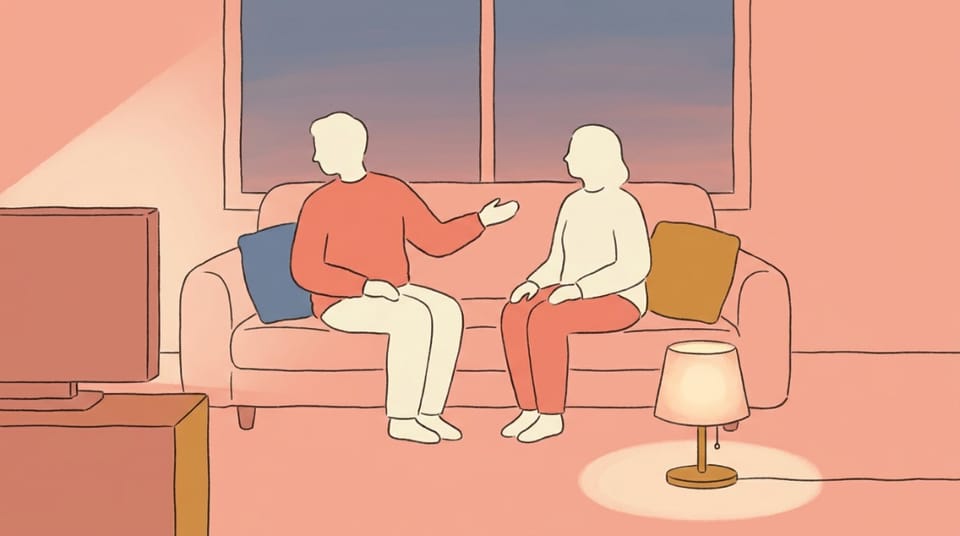
Quick answer: To repair after a missed bid for connection, pause, name the moment, own your part in one sentence, say what you will do differently, and then redo the bid by turning toward your partner. Do it within minutes if the miss was small, or the same day if the moment turned into tension.
Repair after a missed bid is the short, deliberate step of acknowledging that your partner reached for connection, taking responsibility for your part in missing it, and reconnecting. Every couple misses bids sometimes. What shapes the relationship is what happens in the next few minutes.
TL;DR
- Timing: repair within minutes for a small miss, the same day if your partner's tone changed, and after a 20–30 minute break if either of you is overwhelmed.
- Method: the 60-Second Reset has 5 moves: pause, name, own, offer, redo.
- Apology research: in a 2016 study of 755 adults, taking responsibility and offering to repair mattered most, and asking for forgiveness mattered least. The scenarios were hypothetical and work-related.
- Wording: after "I'm sorry," use "and" or stop. A "but" turns an apology into an excuse.
- If you were the one missed: lead with one feeling and one need ("I felt... I needed..."), not "you never."
- If you are apart: send a short voice note the same day, then follow with a call.
- If it keeps repeating: repair handles one moment, not a pattern. Track the pattern for 7 days and talk about it.
What Is Repair After a Missed Bid? 💬
Repair after a missed bid is what you do once you realize your partner reached out and you did not respond in the way they needed. A bid is any small attempt to get attention, affection or support, such as a comment, a question, a touch or a look. Repair turns the miss into a second chance to answer.
The Gottman Institute describes the broader skill as a repair attempt, and says its goal is to understand what went wrong and make the next conversation more constructive. This post covers the narrower case where a bid went unanswered, which is where the bids for connection guide leaves off. If you want to understand why the miss happened first, read why partners turn away from bids.
When Should You Repair After a Missed Bid?
Repair as soon as you notice the miss, ideally within minutes. If the moment turned tense, repair the same day. If either of you feels flooded (racing heart, shutting down, snapping), take a break of 20–30 minutes before you try, and return within a day.
Match the repair to what actually happened:
- Small and fresh: you glanced at your phone mid-story. Redo the bid on the spot.
- Tone changed: your partner went quiet or short with you. Use the full 60-Second Reset today.
- It became a fight: take the break first, then use the full aftermath conversation in the table below.
Waiting does not make the miss smaller. Left alone, a small miss can start to read to the person who was missed as a pattern, so a one-line repair now is easier than a long one next week.
How Do You Apologize After Missing a Bid? 🤝
A good apology after a missed bid takes responsibility for your part and offers a concrete repair. In one 2016 study of apologies, those were the two of six elements that mattered most, and asking for forgiveness mattered least. Keep it specific, and let your partner respond before you ask for anything.
The six elements, translated to a missed bid:
- Acknowledge responsibility (most important in the study): "I didn't answer you when you were telling me about your day. That was on me."
- Offer a repair (second most important): "Can you tell me again? I'm listening this time."
- Express regret: "I'm sorry it felt like you were talking to a wall."
- Explain, briefly: "I was stuck on a work email." One clause, not a defense.
- Say what you'll do differently: "Next time I'll put the phone down, or tell you I need two minutes."
- Ask for forgiveness (least important in the study): optional, and only after your partner has had room to respond.
The study named the top two and the bottom one. The middle three are listed in the order that reads naturally in conversation, not in a research ranking.
Small wording changes decide whether an apology lands:
Weak apology | Stronger version | Why it works |
|---|---|---|
"Sorry you feel ignored." | "I ignored you, and I'm sorry." | Owns the action, not your partner's reaction |
"Sorry, but I was busy." | "I was busy, and I should have said so." | Replaces "but" with a commitment |
"I already said sorry." | "Tell me what you needed, and I'll listen." | Invites the need instead of closing the topic |
Which Type of Repair Fits the Moment?
The right repair depends on how big the miss was and how your partner reacted. Use the smallest repair that fits, and move up only when your partner's tone tells you it was not enough.
Repair type | Best for | Time | Example line |
|---|---|---|---|
Redo the bid | Small, fresh miss; tone unchanged | 10–30 seconds | "Sorry, say that again. I'm listening." |
60-Second Reset | Your partner went quiet or short | About a minute | See the framework below |
Aftermath conversation | The miss turned into a fight | After a break, unhurried | "I'd like to understand what that was like for you." |
Voice note or message | You are apart or cannot talk now | Same day | "I saw your message late and didn't answer well. Call tonight?" |
Decision rule: if your partner's tone has not changed, redo the bid; if it has, name it; if you are both heated, take a break first and talk later.
For the aftermath conversation, the Gottman "aftermath of a failed bid" exercise offers a five-step structure: share feelings, explain each person's subjective reality using "I needed..." statements, identify triggers, take responsibility, and agree on constructive plans. One partner speaks while the other listens and summarizes with empathy, then you swap.
What Is the 60-Second Reset, and How Do You Use It? 🔁
The 60-Second Reset is a five-move repair you can finish in about a minute: pause, name, own, offer and redo. It works because it names what happened, takes responsibility in one sentence, and then gives your partner the answer they originally reached for.
- Pause. Take one breath and check your state. If your heart is racing or you feel defensive, ask for a break instead: "I want to do this properly. Give me 20 minutes."
- Name the moment. Describe what happened, not what it says about either of you: "When you were telling me about your meeting, I was on my phone."
- Own your part. One sentence, no "but": "I missed it, and I'm sorry."
- Offer a change. Say what you will do next time, or ask: "What would have helped?"
- Redo the bid. Turn toward your partner and answer what they first reached for: "Now tell me about the meeting. I'm listening."
Spoken together, it sounds like this: "When you were telling me about the meeting, I was scrolling. I missed it, and I'm sorry. Next time I'll put the phone down or ask for two minutes. Now tell me about the meeting."
The redo is the step most apologies skip. An apology says what went wrong, and the redo shows you meant it. If you are unsure what the original bid was asking for, the list of bids for connection examples can help you recognize it.
Original element: Repair Script Cards
These cards from the Flamme editorial team are editorial guidance, not research findings. Adapt the wording until it sounds like you.
Situation | Name the moment | Own it and redo |
|---|---|---|
Phone out during their story | "You were telling me about your day and I was scrolling." | "I missed it. Can you start again? The phone is down." |
Put them off for work | "You asked me to look at something and I said 'in a minute' three times." | "That wasn't fair. I'm closing the laptop. Show me." |
Answered a bid with sarcasm | "I answered your story with a joke." | "That wasn't what you needed, and I'm sorry. I'm interested. Go on." |
Did not follow up on something they shared | "You told me about your appointment and I never asked how it went." | "I should have asked. How did it go?" |
Snapped when they walked in to talk | "I snapped at you when you came in to tell me something." | "You weren't a bother. Can we try that again?" |
Late reply to an emotional message | "I read your message and didn't answer until tonight." | "That was the wrong timing. Do you want to talk now?" |
Not sure how to restart the conversation once the repair lands? Pick one of the questions for couples and ask it tonight.
What If You Were the One Whose Bid Was Missed? 💛
If your bid was missed, start the repair with one feeling and one need, not a charge. Say what happened, how it felt, and what you wanted: "When I was telling you about my day and you kept scrolling, I felt invisible. I needed a minute of your attention." This is the "I felt... I needed..." format from the Gottman aftermath exercise.
Try this order:
- Wait until you can be specific. "You never listen" gives your partner nothing to repair. "Just now, when I mentioned my sister, I needed you to look up" does.
- Describe the moment, then the feeling. Skip the verdict on your partner's character.
- Name the need, then make a small ask. "Can we try that again?" is easier to say yes to than "You have to change."
- Accept the repair when it comes. If your partner redoes the bid, meet them there. Keeping score after a real attempt makes the next one less likely.
If you have missed each other's bids for weeks, a one-off repair will not be enough. Track what is happening for a few days, as in the 7-Day Bid Log in the bids for connection guide, then bring a pattern to your partner, not a list of grievances. Starter prompts from the emotional check-in questions for couples can make that conversation gentler.
How Do You Repair Across Distance?
When you are apart, repair by message or voice note the same day, then follow with a live call. Text strips out tone, so a short voice note carries more warmth than a long apology in writing. Keep the same moves: name the moment, own it, offer a change, then redo the bid.
- Reply gap: "I saw your message this morning and didn't answer properly. I'm sorry. Tell me about it now, I have 20 minutes."
- Distracted call: "I was half on my phone during our call. That wasn't fair to you. Can we talk again tonight with my full attention?"
- Time zones: agree a window. "I'll answer anything emotional within a few hours, even if it's just 'I saw this, calling at 8'."
A short acknowledgment that you will give a proper answer later is itself a way of turning toward a bid, so you do not need a perfect reply in the moment.
Why Do Repairs Fail, and What Do You Do Then?
A repair fails most often because the emotional climate is not ready, not because the words were wrong. The Gottman Institute reports that after studying more than 3,000 couples, how a repair was made did not necessarily predict how well it worked. The emotional climate of the relationship and the receiver's physiological state mattered.
Common reasons and what to do:
- Your partner is flooded. Offer a break and a time to return: "I'll give you space. Can we talk at 7?"
- The apology had a "but." Restart with only the owning sentence.
- The repair was really a request. If you apologize to get a quick "it's fine," your partner may sense it. Apologize for your part, then listen.
- It keeps happening. Repair cannot replace change. Revisit what is behind the misses with why partners turn away from bids.
- Trust feels thin. Repairs land more easily in a relationship that feels safe, so read emotional safety in a relationship and build that foundation in small, daily ways.
If your partner does not accept the repair, do not repeat it louder. Say, "I meant it. I'm here when you're ready," and let it rest.
How Can Flamme Help You Repair and Reconnect? 🔥
Repair works best in a relationship where small moments of connection already happen every day. Flamme is built for that daily layer: couples get daily conversation prompts, emotional check-ins that make it easier to say "I felt... I needed...", and Flamme AI to help you find the words when an apology is hard to start. If you are apart, Flamme's long-distance tools keep the connection going between calls.
Curious how each of you gives and receives care? The Type of Lovers quiz can help you understand each other's styles, so your repairs speak your partner's language.
Download Flamme and grow closer every day
Final Takeaway
Missing a bid is normal, and repairing it takes about a minute: name the moment, own your part, offer a change and redo the bid. What matters most is that you come back.
Frequently Asked Questions
How do you repair after ignoring your partner's bid for connection?
Name what happened, own your part in one sentence, say what you will do differently, then redo the bid by giving the attention your partner first asked for. For example: I was scrolling while you talked, and I am sorry. Next time I will put the phone down. Now tell me about your day.
What should you say when you realize you missed your partner's bid?
Start with the moment, not an excuse: When you were telling me about your meeting, I was on my phone. Add one owning sentence, such as I missed it, and I am sorry, then ask to hear it again. Keep it short and specific so your partner can respond.
What if my partner does not accept my repair?
Do not repeat it louder. Say that you meant it and that you are available when they are ready, then give them space. A repair may fail because your partner is flooded or the trust feels thin. If it keeps failing, talk about the pattern or consider a couples therapist.
How do you repair a missed bid in a long-distance relationship?
Send a short voice note or message the same day that names the moment and owns it, then follow with a live call where you redo the bid. Voice carries more warmth than long text. Agree on a response window for emotional messages across time zones to prevent repeat misses.
What is the difference between a repair attempt and an apology?
A repair attempt is any move that keeps tension from escalating or helps the two of you reconnect, such as humor, a touch or a redo. An apology is one kind of repair that takes responsibility for a specific action. After a missed bid, the strongest repairs usually combine both.