Bids for Connection: Examples, How to Respond

Oct, 2026 · @Agni
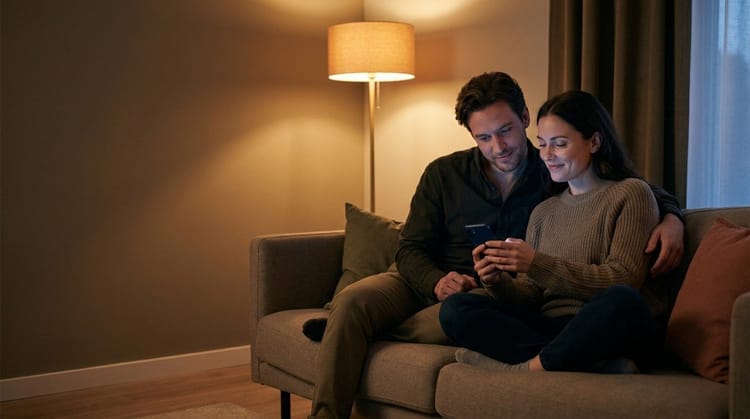
A bid for connection is any small attempt to get your partner's attention, affection or support, like a comment, a touch or a text. Couples grow closer when they turn toward these bids instead of ignoring or rejecting them. This guide shows what bids look like, how to respond, and how to make them long distance.
A bid for connection is any attempt, verbal or nonverbal, to ask your partner for attention, affirmation or affection.
TL;DR
- A bid is a small request for connection: a question, a joke, a touch, a text or a shared link.
- Partners can turn toward (engage), turn away (miss) or turn against (reject) every bid.
- In the Gottman Institute's six-year follow-up of newlyweds, couples who stayed married turned toward bids 86% of the time; couples who divorced averaged 33%.
- Turning toward takes seconds: pause, face your partner and give one specific reply.
- In long-distance relationships, a delayed or flat reply can read as a missed bid, so reply habits matter more.
- Tracking bids for 7 days shows your pattern faster than talking about it in the abstract.
💬 What Are Bids for Connection?
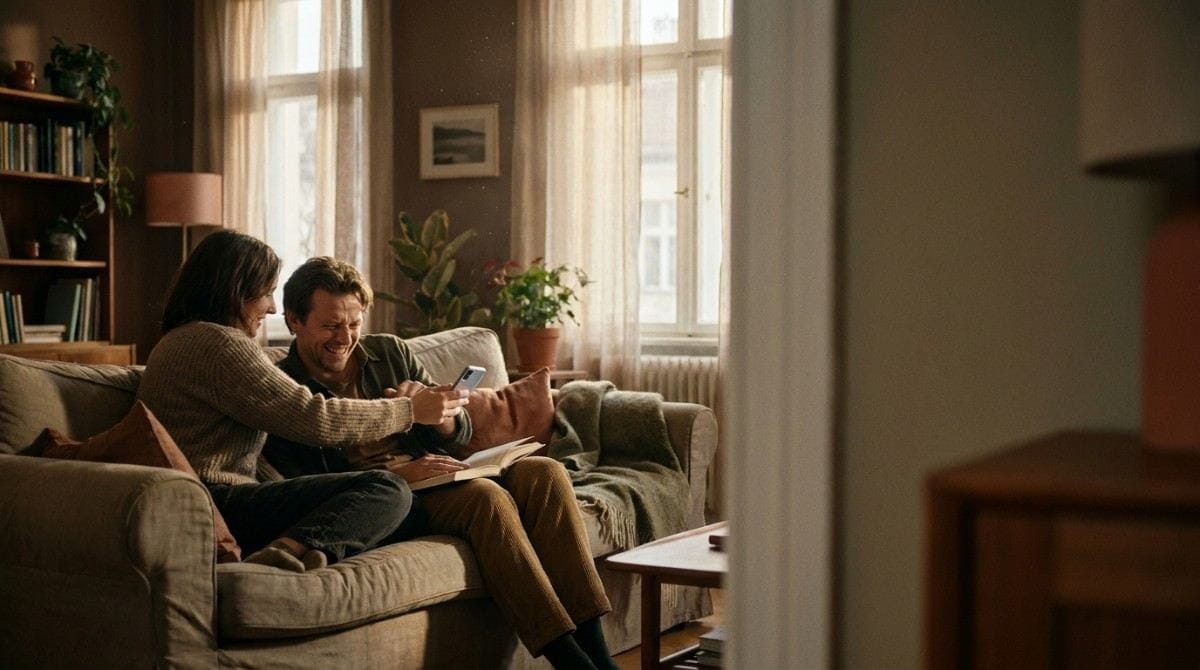
The Gottman Institute describes a bid as any attempt from one partner to another for attention, affirmation or affection. Bids are the building blocks of couples communication, and most are tiny and easy to miss, which is why they connect closely to the small daily habits that keep couples close. How your partner answers decides whether the moment builds trust or quietly erodes it.
Turning toward means engaging with the bid. Turning away means missing it, and turning against means rejecting it. Here is how one bid can land three ways:
Bid | Turn toward | Turn away | Turn against |
|---|---|---|---|
"Want to hear about my meeting?" | "Yes, tell me everything." | "Mm-hm" while scrolling | "Can this wait? I'm busy." |
"Look at this dog video." | Watches and laughs: "That tail!" | No reply | "Why do you always send me stuff?" |
Reaches for your hand | Holds it and squeezes | Keeps typing, hand limp | Pulls away: "Not now." |
"Today was rough." | "Come here. What happened?" | "Mm. What's for dinner?" | "You always complain." |
Text: "Thinking of you" | "Same! How's your day going?" | Reads it, never answers | "Stop sending these." |
Decision rule: if you cannot give a full answer right now, turn toward with a short promise ('I want to hear this, give me ten minutes') rather than silence.
Want a ready list of easy bids to start with? Flamme's conversation starters for couples hub doubles as a set of low-pressure bids you can send any day.
🧠 Why Do Bids for Connection Matter?
Bids matter because each one is a small test of whether your partner is emotionally available, and the answers accumulate. A turn toward says "you matter to me." A turn away says the opposite, even when nobody meant it that way.
The pattern is predictable. After a few missed bids, the person reaching out expects disappointment and reaches less, while the other partner sees fewer bids and assumes everything is fine. Emotional intimacy often fades through this quiet withdrawal long before any big fight.
📊 Statistics & Research Insight
- Turning toward and staying together: the Gottman Institute reports that newlyweds followed for six years who stayed married turned toward each other's bids 86% of the time, while couples who divorced averaged 33% (Gottman Institute). This means the difference showed up in everyday responsiveness, not only in how couples handled conflict.
- Limits: the source does not state the sample size, and the findings are observational. They show a strong association, not proof that turning toward alone keeps couples together; treat the figures as a reason to practice, not a prediction.

🔁 How Do You Respond to a Bid for Connection?
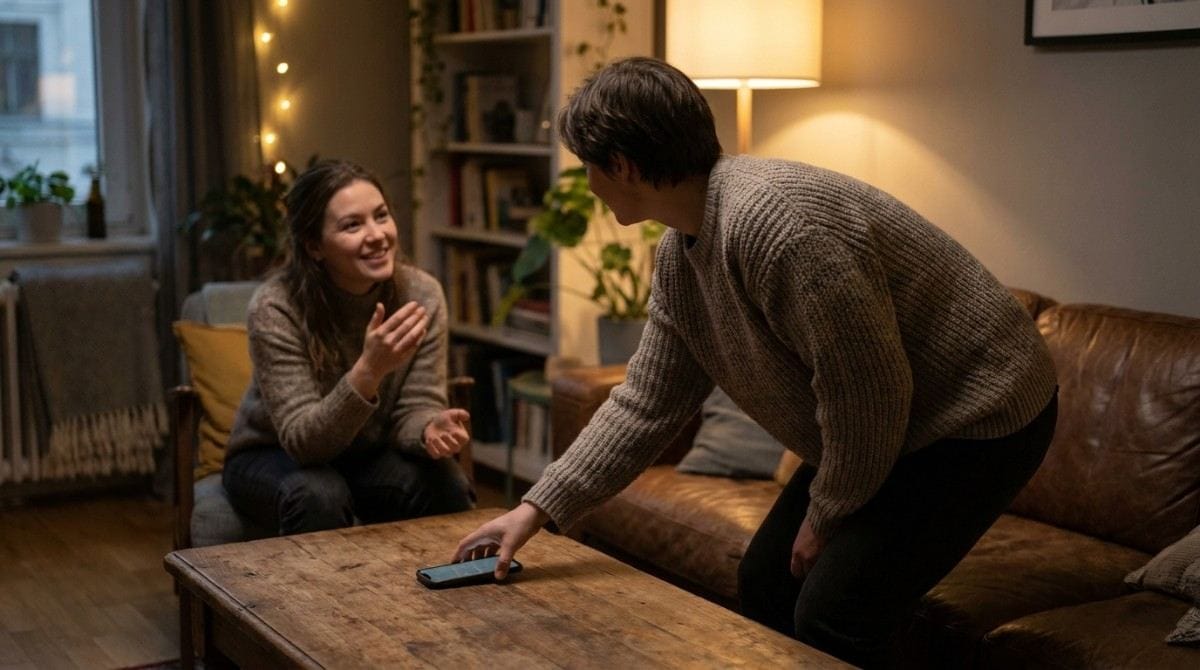
You respond to a bid by noticing it, pausing what you are doing and answering with one specific sentence that echoes what your partner said. The reply does not need to be long or perfect; it needs to be visible.
Waking up, coming home and winding down for bed are natural moments to practice.
Quick Framework: The 4-Step Turn-Toward Reply
- Notice any unusual sentence, sigh, touch or shared link as a possible bid. Ask yourself: is my partner reaching for me?
- Pause by putting the phone face down or turning your body toward them. Two seconds is enough.
- Answer with one specific sentence that repeats a detail: "A rough meeting with your manager? What happened?"
- Return if you cannot stay: name a time, then come back to it. A kept promise counts as turning toward.
If the conversation opens up, these emotional check-in questions give you somewhere to take it.
🚫 What Happens If Your Bids Keep Getting Missed?
If your bids keep getting missed, name one specific moment once, without blame, and ask for one small change. Missed bids are often distraction or stress rather than indifference, but a repeating pattern still deserves a conversation.
- Describe the moment, not the character: "When I showed you that video and you kept scrolling, I felt a bit invisible."
- Ask for a replacement: "Could you say 'give me five minutes' when you're busy?"
If honest conversations do not change anything after a few weeks, a couples counselor can help you see what is underneath. In a long-distance relationship, missed bids often show up as one person doing all the reaching; see when a long-distance partner stops initiating.
🌱 How Do You Make Bids When Reaching Out Feels Risky?
You make bids safely by starting small, keeping them specific and choosing a format that matches your confidence. A low-risk bid is easy to accept, so it builds the habit of asking without needing a big emotional disclosure first.
Style | Example bid | Best when |
|---|---|---|
Subtle | Setting a second cup of tea next to your partner | You are shy or the mood is tense |
Playful | "Rate my outfit: a solid 3 or a legendary 4?" | The mood is light |
Confident | "I'd love ten minutes of your attention after dinner." | You know what you need |
Vulnerable | "I had a hard day and I need a hug." | You trust the response will be kind |
Decision rule: start at the top of the table and move down as responses feel safe. Fear of rejection is normal; if you tend to hold back, the Type of Lovers quiz can help you see how you naturally reach for connection.
🌍 How Do You Make Bids in a Long-Distance Relationship?
In a long-distance relationship, you make bids through texts, voice notes, photos and scheduled calls, and you reply to them faster than feels natural. Without body language, a delayed or one-word answer is often the main signal your partner gets.
Everyday bid | Long-distance version | Turn-toward reply |
|---|---|---|
Smile across the room | Photo of something that made you think of them | "Ha, that's so you! Where was this?" |
Hand squeeze | A voice note of 20 seconds | A voice note back, even a short one |
"Come look at this" | Send a link, watch it together on a call | "Okay, play it at the same time on three" |
Sitting nearby in silence | An open video call while you cook or work | Staying on camera, not muting yourself |
Time zones need rules. If you cannot reply for hours, send a quick holding message such as "in meetings until 6, thinking of you" so silence does not read as turning away. To build the habit, see how couples build emotional intimacy from a distance, and compare texting versus calls and apps to choose the channel that fits your schedule.
📒 Key Insight: The 7-Day Bid Log
A bid log makes an invisible habit visible. For seven evenings, spend two minutes writing three things: one bid you made, one bid you noticed from your partner, and how each was answered (toward, away or against).
Day | Bid made or noticed | Response | What I'd do next time |
|---|---|---|---|
Example | I showed Sam a meme at 8 pm | Away (phone) | Wait for eye contact before sharing |
Day 1 | |||
Day 3 |
On day 7, ask: When do we miss each other most? Which bid style gets the warmest reply? What is one bid I will make tomorrow? Share your answers without scoring each other; the goal is a pattern you can both see.
⚠️ When NOT to Use This
- When you need solitude. Turning toward does not mean being available every moment; "I need an hour, then I'm all yours" is still a turn toward.
- As a scorecard. Counting missed bids to win an argument turns a connection tool into a weapon.
- When a "bid" is a demand. Constant check-ins, instant-reply expectations or monitoring are pressure, not bids.
- If you feel unsafe or controlled. This framework is not the right tool; please talk to a qualified counselor or a local support service.
✨ Final Takeaway
Bids for connection are small, daily requests for attention, and turning toward them is a habit anyone can practice to strengthen relationship bonding. Start with one pause, one specific reply and one bid a day.

💛 Turn Bids Into a Daily Ritual With Flamme
Reading about bids will not change a Tuesday night; repeating small moments will. Couples who want more than passive advice need a structure that makes reaching out the default, and consistency is what turns a technique into emotional intimacy.
Flamme is an AI-powered relationship app that works as a guided system for daily relationship rituals. It offers daily conversation prompts, emotional check-ins, long-distance bonding tools and personalized growth journeys. If you want to understand how you and your partner naturally reach for each other, the Type of Lovers quiz is a good place to begin.
- A daily prompt is a ready-made bid. One Flamme question invites a real answer in a few minutes, so you practice turning toward without inventing the topic.
- Streaks reward showing up. Small, repeated moments of attention add up, and a streak makes the ritual easy to keep.
- Long-distance tools create shared moments. When you cannot share a room, Flamme gives you something to do together instead of only trading updates.
Download Flamme and grow closer every day
❓ Frequently Asked Questions
What is a bid for connection? A bid for connection is any verbal or nonverbal attempt to ask your partner for attention, affirmation or affection. It can be a question, a joke, a touch, a shared link or a text. Partners can respond by turning toward, turning away or turning against the bid.
What are examples of bids for connection? Examples include asking 'How was your day?', sharing a funny video, reaching for a hand, sighing after a hard day, sending a good-morning text or inviting your partner on a walk. Bids are usually small and ordinary, which is why they are easy to miss.
What does it mean to turn toward your partner? Turning toward your partner means noticing a bid and engaging with it, even briefly. You pause, face them and respond with a specific sentence or gesture. If you are busy, you can still turn toward by naming a time to come back to the conversation.
How often should couples turn toward each other's bids? There is no perfect number. The Gottman Institute reports that newlyweds who stayed married turned toward bids 86% of the time, versus 33% for those who divorced. Aim for most bids rather than all of them, and repair quickly when you miss one.
What should I do if my partner ignores my bids? Describe one specific moment without blame, say how it felt and ask for one small change, such as 'give me five minutes' when they are busy. Also reply to their bids first. If the pattern continues for weeks, consider a couples counselor.
How do you make bids for connection in a long-distance relationship? Use texts, voice notes, photos, shared links and open video calls as bids, and reply quickly or send a holding message such as 'in meetings until 6, thinking of you.' Scheduled calls and a daily shared question help keep bids consistent across time zones.